
Quick Answer
Custom home selections can affect schedule and budget because many choices need to be priced, ordered, coordinated, and installed at the right time.
Windows, doors, cabinetry, appliances, plumbing fixtures, lighting, tile, flooring, exterior materials, outdoor living features, and custom details may all affect cost, lead times, trade scheduling, and change decisions.
Table Of Contents
- What Selections Mean In A Custom Home
- Why Selection Timing Matters
- How NoCO Connects Selections To The Build
- Build A Selection Roadmap
- Which Selections Can Affect Schedule
- Which Selections Can Affect Budget
- How Allowances Should Be Discussed
- Prepare For Selection Appointments
- Compare The Complete Installed Choice
- Why Changes Need Clear Documentation
- Plan For Availability And Substitutions
- Sources And Review Boundaries
- FAQ
What Selections Mean In A Custom Home
Selections are the materials, fixtures, finishes, appliances, surfaces, colors, hardware, lighting, and specialty details chosen for the home.
In a detailed custom home, selections may be connected across rooms. A kitchen decision may affect cabinetry, appliances, lighting, flooring, plumbing, electrical, and layout details.
Why Selection Timing Matters
Some decisions need to happen earlier than homeowners expect. Delayed selections can affect ordering, trade scheduling, design coordination, or installation timing.
The builder should help explain which decisions need to happen early, which can wait, and how deadlines will be communicated.
How NoCO Connects Selections To The Build
NoCO’s published process gives homeowners a concrete way to test these questions. The company describes a pricing structure in which items homeowners cannot control after design are fixed where possible, while finish and fixture choices remain in defined allowances. It also describes weekly updates, prompts for decisions needed to maintain momentum, and a Project Manager plus Superintendent assigned to the work. Review the current details on NoCO’s About page and confirm how they apply to your project and agreement.
That operating structure matters because a selection should not float separately from the budget and field schedule. The decision record should show what was selected, who approved it, which allowance or scope line it affects, what must happen before release, and whether another activity depends on it.
Build A Selection Roadmap
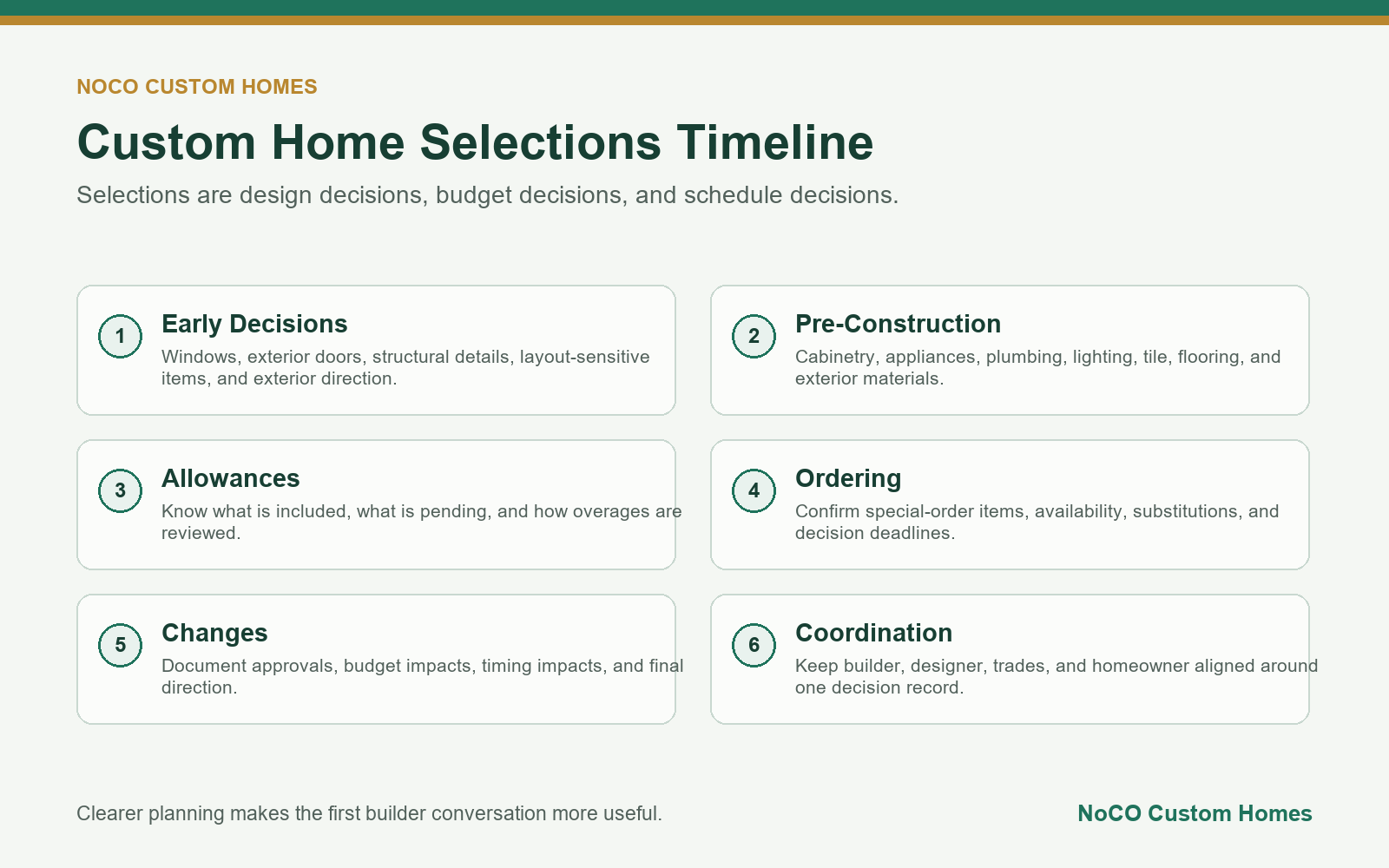
A selection roadmap groups decisions by when information is needed, not simply by which room feels most exciting. Early groups may include exterior assemblies, windows, doors, appliances, cabinetry direction, plumbing locations, and items that affect framing or rough-ins. Later groups may include paint colors, decorative hardware, and details that do not change earlier work.
Ask who owns each decision, which professional provides options, what information must be approved, and what happens after approval. A shared schedule or selection log can make upcoming deadlines visible and reduce last-minute decisions.
Use a record like this for every schedule-sensitive selection:
| Record | Question To Answer |
|---|---|
| Decision and location | What exactly is being selected, and where will it be used? |
| Owner and approver | Who develops the choice, and who gives final written approval? |
| Decision trigger | Which drawing, field measurement, sample, or price is needed first? |
| Budget baseline | Which allowance or scope item applies, and what does it include? |
| Release date | When must the order be released to support the current sequence? |
| Connected work | Which framing, rough-in, fabrication, or installation task depends on it? |
| Fallback | What approved alternative will be reviewed if availability changes? |
Which Selections Can Affect Schedule
Windows, exterior doors, cabinetry, appliances, specialty fixtures, tile, lighting, custom metal or wood details, and outdoor living elements may require coordination before they appear on site.
Some choices can affect framing, rough-in, layout, or trade sequencing, so they should be discussed before construction is too far along.
Lead time is only part of the timing question. A product may also require shop drawings, field measurements, engineering, finish samples, or coordination with several trades before an order can be released. Ask what has to happen before the quoted lead time begins.
Which Selections Can Affect Budget
Selection choices can move the budget because materials and product lines vary widely. A homeowner may choose to invest more in certain areas and simplify elsewhere.
Useful budget conversations identify which selections have the widest range, which priorities should be protected, and how substitutions or upgrades are reviewed.
How Allowances Should Be Discussed
An allowance is a budget placeholder for a selection category that may not be fully chosen yet. Homeowners should understand what each allowance includes and how selections are tracked against it.
Ask how you will know whether a selection is above or below allowance, how changes are approved, and how updated costs are documented.
Also confirm whether an allowance covers materials only or includes labor, delivery, tax, accessories, preparation, and installation. Two products with similar shelf prices can create different installed costs when their supporting work is different.
Prepare For Selection Appointments
Before an appointment, review the available budget, the decisions that must be made, and the spaces affected. Bring inspiration, but add notes about function, maintenance, color direction, and the priorities you are trying to protect.
Limit the conversation to the decisions that are ready. Choosing a finish before its surrounding materials, dimensions, or technical requirements are known can create rework. Ask which samples can be taken home and which choices should be viewed together under similar light.
Compare The Complete Installed Choice
A selection is rarely just the visible item. Cabinetry includes layout, construction, finish, hardware, organization, installation, and coordination with appliances and countertops. Tile may involve pattern, trim, substrate, waterproofing details, layout, and labor.
When comparing options, ask what the quoted choice includes and what else it changes. This helps the homeowner compare complete packages rather than assuming that a sample or unit price represents the full effect on the project.
Why Changes Need Clear Documentation
Changes are normal in custom home projects, but they need structure. Verbal changes can create confusion around price, schedule, ordering, or installation.
Good documentation helps protect the budget, schedule, and expectations for both the homeowner and the build team.
A clear approval should identify the selected product or scope, current price impact, known schedule impact, and any related decisions. Confirm where approvals live and which team member is authorized to release an order or direct a trade.
Plan For Availability And Substitutions
Products can be discontinued, delayed, damaged, or unavailable in the required quantity. Ask how the team monitors availability and when a backup option should be identified for a schedule-sensitive choice.
A substitution should still be reviewed for dimensions, performance, finish, compatibility, price, and effects on other work. Similar appearance alone does not mean two products coordinate the same way.
Sources And Review Boundaries
The National Association of Home Builders material-assessment guidance recommends collecting product and manufacturer information before unfamiliar materials are used. NAHB’s residential contract resources also distinguish selection allowance worksheets, pricing requests, and written change orders, including cost and completion-time effects. Those industry examples support the recordkeeping approach above, but they do not replace the contract, specifications, supplier confirmation, or project-specific advice.
Product availability and lead times change. Confirm current information with the builder, designer, supplier, manufacturer, and affected trade before relying on a decision date.
FAQ
What are selections in a custom home?
Selections are choices like windows, doors, flooring, tile, cabinetry, countertops, appliances, plumbing fixtures, lighting, hardware, exterior materials, and specialty details.
Which custom home selections should be made early?
Selections that affect structure, layout, rough-ins, ordering, or trade coordination should be discussed early. The exact timing depends on the project and process.
How do selections affect a custom home budget?
Selections affect budget because product lines, materials, finishes, and custom details can vary widely in cost.
What are allowances in a custom home?
Allowances are budget placeholders for selection categories. Homeowners should understand what each allowance includes and how final choices are tracked.
Can changing a selection delay construction?
It can, especially if the change affects ordering, availability, rough-ins, layout, or other trades. Clear documentation helps explain the impact before the decision is final.
Related NoCO Resources
- Luxury Custom Homes in Colorado
- Choosing a Custom Home Builder in Colorado
- Custom Home Timeline in Colorado
- Our Process
- Portfolio
- Contact NoCO Custom Homes
The Takeaway
Selections are part of the schedule and budget conversation, not just a design detail. A clear decision rhythm helps the project stay organized and helps homeowners understand tradeoffs before changes create pressure.