
Quick Answer
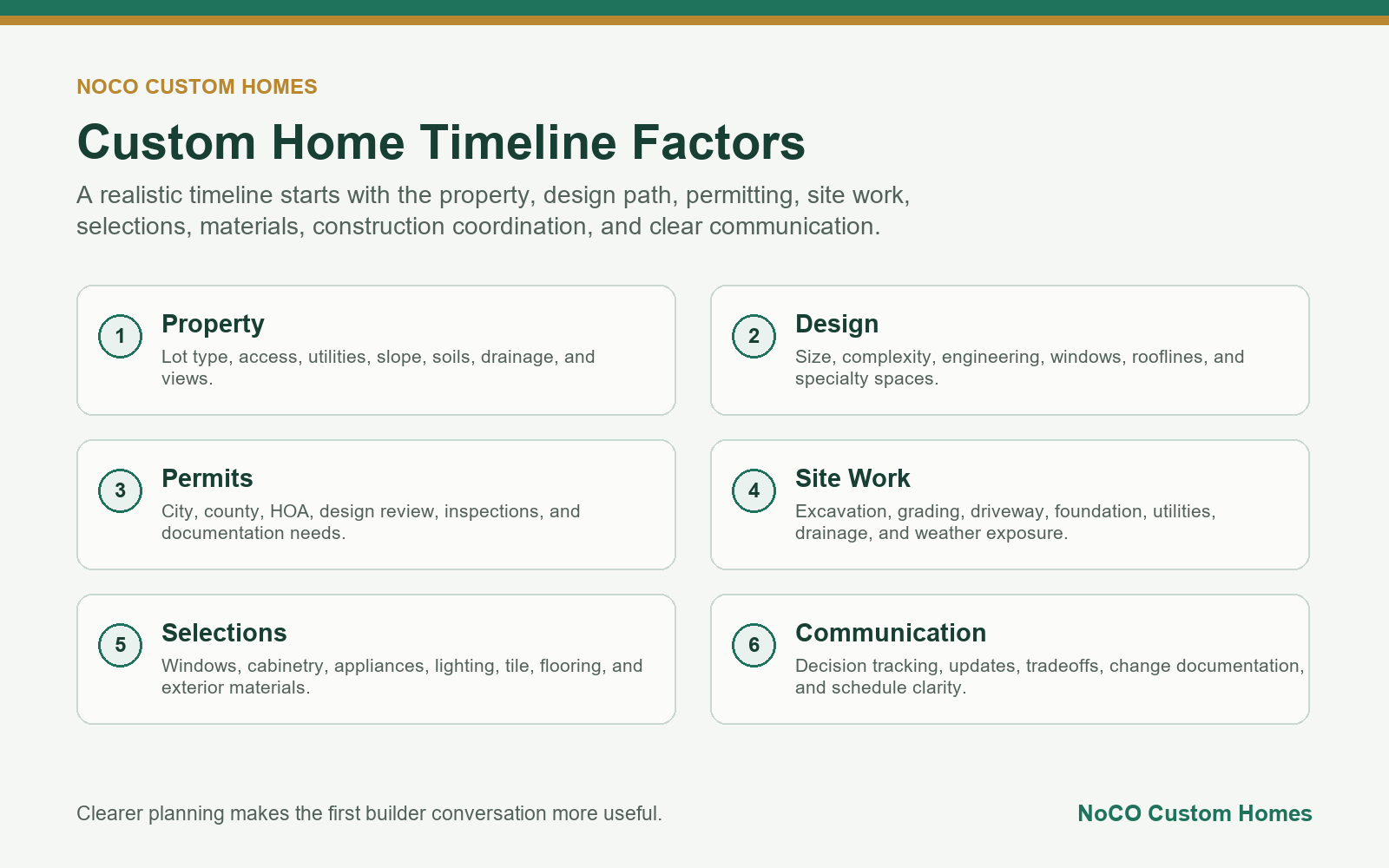
The timeline for a custom home in Colorado depends on the property, design complexity, permitting path, site conditions, utility access, engineering, weather, materials, selections, change decisions, and how well the builder, design team, and homeowner stay coordinated.
A realistic timeline starts with early planning. The more clearly the land, budget, design, and decision process are understood, the easier it is to set expectations.
Table Of Contents
- Start With The Property
- Design Complexity Affects The Schedule
- Permits And Reviews Can Vary By Location
- Site Work Can Change The Timeline
- Selections And Decisions Matter
- Materials, Trades, And Weather Can Affect Timing
- Communication Helps Prevent Avoidable Delays
- FAQ
Start With The Property
The property can shape the timeline before design or construction begins. A city lot, acreage property, foothill site, infill lot, or build-on-your-lot project may each require different early work.
Access, utilities, slope, soils, drainage, views, fire-aware planning, and outdoor living goals can all affect what needs to happen before construction moves forward. The earlier those questions are reviewed, the more realistic the schedule conversation can be.
Design Complexity Affects The Schedule
More custom detail usually means more coordination. Home size, structural complexity, window packages, rooflines, specialty spaces, outdoor living areas, and higher-end selections can all affect timing.
That does not mean homeowners should avoid customization. It means the team should understand which design choices may require more planning, engineering, pricing, or trade coordination.
Permits And Reviews Can Vary By Location
Permitting and review steps can vary by city, county, community, and property type. Some properties may also involve HOA, design review, engineering, or additional documentation before construction begins.
A builder should help homeowners understand which approvals may apply and which timeline assumptions are still too early to make. The goal is clarity, not guessing.
Site Work Can Change The Timeline
Site preparation is one of the biggest timeline variables in a custom home project. Excavation, grading, foundation work, driveway planning, retaining walls, utility trenching, septic or well questions, drainage, and weather exposure can all matter.
For build-on-your-lot projects, the site review should happen early enough that the design and budget can respond to what the land actually requires.
Selections And Decisions Matter
Homeowner decisions can speed up or slow down the process. Windows, doors, cabinetry, appliances, plumbing fixtures, lighting, tile, flooring, exterior materials, and specialty spaces may all have decision deadlines.
A good process helps homeowners know what needs to be chosen, when it needs to be chosen, and how each decision may affect budget or timing.
Materials, Trades, And Weather Can Affect Timing
Material availability, delivery timing, inspections, trade availability, and Colorado weather can affect the construction rhythm. This is not a reason to panic. It is a reason to set flexible expectations and communicate clearly.
When a selection or material becomes difficult to source, the builder should explain the options, timing, and tradeoffs before a decision creates more pressure.
Communication Helps Prevent Avoidable Delays
Not every delay can be avoided, but unclear communication creates preventable problems. The builder, homeowner, architect, designer, engineer, and trade partners need a shared rhythm for questions, decisions, updates, and changes.
The best schedule conversations are honest and organized. They explain what is known, what still needs review, and what decisions need attention next.
FAQ
How long does it take to build a custom home in Colorado?
There is no one timeline that fits every custom home. The property, design, permitting path, site work, selections, materials, weather, and project complexity can all affect timing.
What causes custom home timelines to change?
Common factors include site conditions, design changes, permit or review timing, utility questions, material availability, weather, selections, and late changes to scope or finishes.
Can a builder give an exact timeline at the first meeting?
A builder can usually discuss likely timeline factors, but an exact schedule may be premature before the property, design, budget, permits, and selections are better understood.
Should I involve a builder before buying land?
It can be helpful, especially if the lot has slope, access questions, utility uncertainty, rural conditions, or design constraints. Builder input can help identify questions before the land decision becomes final.
How can homeowners help keep a custom home on schedule?
Homeowners can help by sharing property information early, clarifying priorities, making selections on time, asking questions quickly, and keeping budget and design decisions organized.
Related NoCO Resources
- Our Process
- Choosing a Custom Home Builder in Colorado
- Building On Your Lot in Colorado
- Custom Home Plans in Colorado
- Design-Build Custom Homes in Colorado
- Contact NoCO Custom Homes
The Takeaway
A custom home timeline is shaped by more than construction days. The property, design, site work, approvals, selections, materials, and communication rhythm all matter.
If you are planning a custom home in Colorado, NoCO Custom Homes can help you understand the early decisions that affect timing before the process moves too far ahead.