
Selecting Kitchen Countertop Materials for Your Custom Home
Choosing a kitchen countertop is about more than the way it looks. The right material should fit how you cook, clean, entertain, and use the space every day, while working naturally with the rest of your custom home’s design.
Compare Six Kitchen Countertop Materials
The best countertop material depends on the exact product, finish, fabrication details, and the way the kitchen will be used. Use this comparison to narrow the field, then confirm care instructions, warranty terms, slab availability, support, and installation requirements with the manufacturer, fabricator, and project team.
| Material | What homeowners often value | Questions to resolve before selection |
|---|---|---|
| Engineered quartz | Consistent color and pattern choices, straightforward routine care, and no routine sealing for products such as Cambria. | Confirm the exact manufacturer’s heat guidance, finish, edge limits, slab size, seam plan, and warranty. Use trivets when the manufacturer requires them. |
| Granite | Natural variation, a wide range of colors and movement, and the character of a unique slab. | Review the full slab, finish, fissures and variation, seam placement, and whether the selected stone and finish would benefit from an impregnating sealer. |
| Quartzite | Natural stone movement and color with each slab providing its own pattern. | Have the stone identified correctly, review the full slab, and confirm care, sealing, fabrication, and edge details with qualified suppliers. |
| Marble | Distinctive natural veining and a surface that can develop visible character over time. | Decide whether etching, patina, and product-specific care fit the household’s expectations. Acidic substances can affect calcareous stone. |
| Porcelain or ultracompact surface | Large-format design options and product lines developed for low-porosity, easy-care applications. | Treat performance claims as product-specific. Confirm thickness, edge fabrication, support, chip precautions, heat guidance, finish, and approved cleaning products. |
| Solid surface | A consistent manufactured appearance, integrated design possibilities, and repair options for some forms of minor damage. | Confirm finish, heat protection, chemical compatibility, scratch expectations, sink details, and who can perform an approved repair. |
Engineered Quartz
Engineered quartz can suit homeowners who prefer a controlled appearance and a routine that does not involve periodic sealing. It is still important to review the exact brand rather than assuming every quartz product performs the same way. Ask about hot cookware and countertop appliances, edge and cutout precautions, cleaning products, warranty coverage, slab dimensions, and pattern alignment. A large island may reveal repeats or require seams that are not obvious in a small sample.
Granite
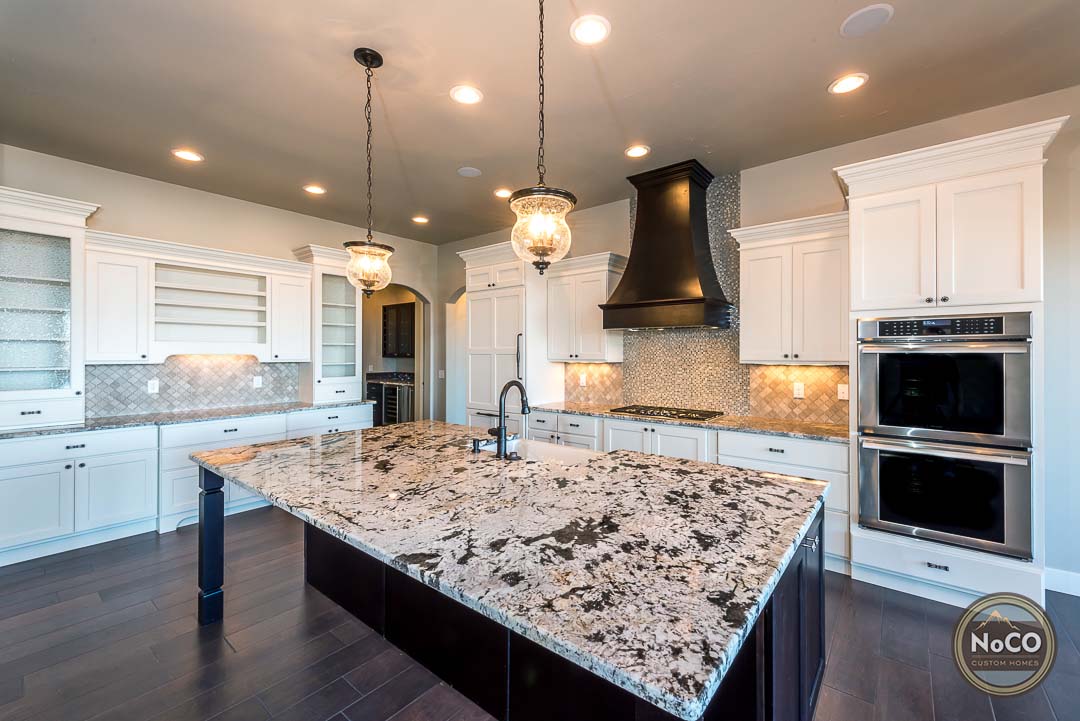
Granite is selected as a full natural-stone slab, so variation is part of the decision rather than a defect to be hidden. Review the actual slab when possible and identify the areas intended for the island, perimeter, and seams. The Natural Stone Institute notes that sealing needs vary; an impregnating sealer can improve stain resistance but does not make stone stain-proof. Ask the supplier and fabricator what the selected stone and finish require.
Quartzite
Quartzite can provide dramatic natural movement, but the label alone is not enough to make a decision. Confirm the material with a knowledgeable stone supplier, inspect the slab, and discuss how its composition, finish, and fabrication affect care and installation. Record the approved slab or lot so the selection team, fabricator, and homeowner are working from the same material.
Marble
Marble may be the right choice when the homeowner values natural veining and accepts that the surface can develop etching and patina. Because marble is a calcareous stone, acidic substances and cleaners require particular care. Review an installed example if possible and decide whether the household expects the surface to remain visually uniform or is comfortable with evidence of use.
Porcelain And Ultracompact Surfaces
This category includes products with different compositions, thicknesses, finishes, and installation instructions. Some lines offer large formats and low-porosity surfaces, but those advantages do not remove the need for careful edge, support, cutout, and handling decisions. Use the technical manual for the exact product. Cosentino’s Dekton guidance, for example, includes product- and thickness-specific precautions rather than one universal rule.
Solid Surface
Solid-surface products can be considered when a consistent manufactured appearance, integrated details, or repairability matters. Care and repair procedures depend on the product and finish. Corian’s technical guidance distinguishes routine cleaning, damage prevention, and professional repair, which is a useful reminder to confirm who will maintain or restore the selected finish before approving it.
Compare Countertops By How The Kitchen Will Be Used
There is no single countertop material that is best for every custom kitchen. Start with the work the surface needs to support: frequent cooking, baking, entertaining, family meals, homework, coffee preparation, or a quieter secondary space. Also consider how quickly spills are cleaned, whether hot cookware is common, how much direct sunlight reaches the room, and how comfortable the homeowner is with patina or visible wear.
Separate must-haves from preferences. One household may prioritize a consistent appearance and straightforward care, while another may value the movement and variation of natural stone. A material that makes sense for a lightly used serving area may not be the same choice for the primary prep zone. Manufacturer documentation and the fabricator should confirm the performance, care, and installation limits of the exact product.
Evaluate Appearance With Real Samples And Full-Slab Context
Small samples help compare color and texture, but they may not show the full movement, veining, variation, or pattern repeat that will appear across a large island or perimeter run. Review samples in the home’s planned daylight and artificial lighting, beside cabinet, flooring, backsplash, hardware, and paint selections. When a product varies substantially, ask whether full slabs or larger-format samples can be reviewed before fabrication.
Think about where seams, changes in direction, waterfall edges, and focal areas may land. Natural materials can vary from one slab to another, and engineered products may have pattern or lot considerations. The final layout should be reviewed with the fabricator so prominent areas, seams, cutouts, and visual transitions are understood before cutting begins.
Ask Practical Questions About Care And Daily Wear
Compare cleaning guidance, sealing requirements, approved products, stain response, heat guidance, scratch and chip considerations, repair options, and how the surface changes over time. Avoid relying on a category-level promise alone. Different products within the same material family can have different finishes, compositions, warranties, and care instructions.
Edge details and surface finishes can influence both appearance and maintenance. Polished, honed, textured, or leathered finishes may show fingerprints, etching, dust, or wear differently. Lighter and darker colors can also reveal crumbs, water marks, or reflections in different ways. Ask to see installed examples when possible, and decide whether the homeowner prefers a surface that stays visually uniform or one that develops character with use.
Coordinate The Material With Cabinets, Sinks, And Appliances
Countertops connect to cabinet construction, support, sink type, faucet and accessory holes, cooktop and appliance cutouts, backsplash details, outlets, plumbing, and wall conditions. Large overhangs, long spans, heavy materials, waterfall panels, or unusual shapes may require additional coordination. The builder, cabinet provider, fabricator, and appropriate design or engineering professionals should confirm support and installation details for the actual plan.
Review edge profile, finished thickness, seam locations, corner treatment, sink reveal, drainage grooves if considered, and how the countertop meets adjacent materials. Confirm who supplies sinks and accessories, who verifies model dimensions, and when those items must be on site. These details are easier to resolve before templating than during fabrication or installation.
Compare The Whole Installed Scope
A material price alone may not represent the complete installed scope. Ask what is included for measurement, templating, fabrication, edge work, cutouts, seams, finishing, delivery, installation, supports, removal or disposal when relevant, and any special handling. Slab yield, pattern alignment, layout complexity, access, and the number of cutouts can affect the amount of material and work involved.
Use the same drawings and assumptions when comparing options. Record the exact product, color, finish, thickness, edge, slab or lot information when applicable, sink and appliance details, included services, exclusions, care requirements, and approval status. That makes the comparison more useful than placing two material names or square-foot figures side by side.
Make The Selection Before Templating And Fabrication
Countertop decisions should be coordinated with the kitchen layout, cabinetry, appliances, plumbing fixtures, backsplash, and lighting. Final field measurements or templates generally depend on installed and verified conditions, so late changes to cabinets, sinks, faucets, cooktops, or edge details can interrupt the sequence. Confirm the actual project schedule with the builder and fabricator.
Before approval, review the final layout, seam plan, edge profile, cutouts, overhangs, support details, finish, and care information. Keep those decisions in the project’s selection record. A clear approval process helps the homeowner understand what will be fabricated and gives the project team one current source for the details that need to align.
Sources And Product Guidance
- Natural Stone Institute: Care and cleaning of natural stone
- Natural Stone Institute: Sealing natural stone countertops
- Cambria: Quartz product care FAQs
- Cosentino: Dekton countertop use and care
- Corian: Solid Surface care and maintenance
Manufacturer instructions and warranties change by product. Confirm the current documents for the exact material selected for the home.
Helpful Next Steps From NoCO Custom Homes
- Floor Plans
- Building on Your Lot
- Questions to Ask a Custom Home Builder
- Gallery
- Contact NoCO Custom Homes
Frequently Asked Questions
What is the best countertop material for a custom kitchen?
The best material depends on how you cook, clean, entertain, and use the kitchen every day.
Which countertops are easiest to maintain?
Quartz is often popular for low maintenance, while natural stone can offer beauty but may need more care.
Should I choose counters before cabinets?
Countertops should be selected with cabinets, layout, backsplash, lighting, and overall design in mind.
Do countertop materials affect resale value?
Quality materials can support value, especially when they fit the home style and are durable for daily use.
When should countertop decisions happen?
Make countertop decisions during design selections so lead times, budget, and cabinet details stay aligned.
Ready to Talk With NoCO Custom Homes?
If you are researching a custom home, comparing builders, reviewing land, or planning design details in Northern Colorado, contact NoCO Custom Homes to start the conversation.